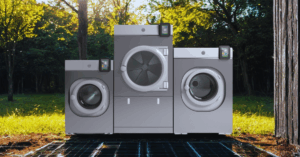
 As you prepare for the CQC Quality Statement (QS) 34, making changes to your laundry could go a long way in reducing your carbon emissions. Rethinking your laundry process not only contributes to achieving your net-zero targets, but it can also improve comfort, efficiency, and resident wellbeing.
Here are 10 ideas that could make a big difference to your laundry operation’s carbon footprint and impact scopes 1, 2 and 3.
SCOPE 1
Change your gas dryers for electric ones
While available budget might not make this an easy change for some organisations, moving away from fossil fuels is one of the most significant changes you could make to achieve your net-zero targets.
Use only what you actually need
From electricity to water and consumables like your chemicals, assessing your usage and rethinking your processes to eliminate over-use will work a treat for your carbon footprint. Smart equipment and auto-dosing systems can help you implement super-efficient processes.
TLC is key
Do you look after your equipment? Over time, your equipment won’t be as efficient as it once was. Maintaining your equipment is critical to optimise its efficiency and longevity.
It may be time for an upgrade. Modern machines are designed with efficiency and sustainability in mind. Consider renewing your equipment to improve your environmental impact.
Adjust your capacity
Is your current set-up adapted to your needs? Regular assessments of your laundry operations will provide insight into whether you are operating the correct type of equipment. If the capacity of your machines isn’t suitable, you might be using more energy than necessary – too small or too big, the size of your machines could cost you and the environment.
The right cycle for the right load
What might seem like time-saving practices can actually reduce overall washing or drying efficiency and increase your energy consumption. Assessing your needs and choosing the right processes, such as sorting items by type or level of soiling and selecting the appropriate programmes, will ensure efficiency and improve your environmental credentials.
Reduce single-use plastics
PPE and personal care items are essential to running safe operations and controlling infections. But could you optimise your single-use plastic consumption? Simple changes could make a big difference in reducing your contribution to landfill waste. This could include using water-soluble or reusable laundry bags, ensuring your staff only wears disposable gloves when necessary, and switching to washable products such as bed pads, underwear and mop heads or cloths.
Train your staff
Training your staff and implementing eco-friendly practices can go a long way. Adopting simple habits such as switching equipment off rather than leaving it on standby will help reduce your energy consumption.
SCOPE 2
Swap to green energy
Whether it’s through changing your energy provider or installing solar panels on your buildings, the move to 100% renewable energy is key to lowering your carbon emissions.
SCOPE 3
Choose your provider wisely
Scope 3 emissions look at the supply chain and the sustainability credentials of your suppliers. By partnering with a provider committed to sustainability, you can take your environmental impact in the right direction.
Reduce chemical waste
Chemicals such as detergents and other laundry products can be toxic to waterways and the surrounding environment if disposed of inappropriately. Using the correct amount of chemicals can not only save you money, but it also ensures you’re not overusing toxic products. Implementing best practices for the use and dosage of chemicals can benefit your care home and the planet. Using an auto-dosing system, for example, is an efficient way to avoid the wastage of chemicals and single-use plastics, eliminate user error, control spending and ensure consistent wash quality.
Your laundry operations need to meet strict hygiene standards while being financially viable and sustainable. WASHCO can provide the advice you need to help you achieve this tricky balance. To find out more about how our team can help, contact WASHCO’s specialists on 08000 546 546 or email info@washco.co.uk.
You can download a PDF copy of this information below: